
Some clients walk me through their homes and apologize for what they love. The emerald velvet chair. The hand-me-down kilim. The wall of art from twenty years of travel. Then they ask me to make it all calmer. I sometimes suggest the opposite. Let’s make it bolder, and let’s make it work. That is the real promise of maximalist interior design. It is not more stuff. It is more intention.
Done well, a maximalist room feels rich, warm, and completely personal. Done poorly, it feels like a garage sale. The difference comes down to a handful of decisions. So today, I’m sharing the framework I use with clients across Denver, from Park Hill bungalows to Cherry Creek townhomes.
Start With a Color Story, Not a Pattern
Most people start with a fabric they love. However, I always start with color, because color holds a busy room together. First, pick one dominant hue. Next, choose one or two supporting colors. Finally, add a single accent that surprises you. Deep teal, warm ochre, and a hit of coral make a strong trio.
Here’s the key. Every pattern you add should share at least one color with that palette. When colors repeat, the eye reads the room as one story. In contrast, when every piece brings a new color, the room splinters.
Colorado light makes this step even more important. Our bright, high-altitude sun shifts how saturated colors read throughout the day. So, test every sample in your own room before you commit.
Choose an Anchor Pattern First
Every successful maximalist room has a boss. That boss is your anchor pattern, usually the largest and boldest print in the space. Think sweeping floral wallpaper, a big-scale rug, or dramatic drapery.
Once you choose the anchor, pull your palette straight from it. A good anchor holds three to five colors. As a result, it hands you a ready-made color story for everything else. Then give it room to breathe. A large-scale wallpaper on one dining room wall, for instance, gives the eye a clear landing spot.
Vary the Scale So Patterns Work Together
Scale is where most pattern mixing goes wrong. Two large prints side by side fight for attention. Likewise, three tiny prints together blur into visual static.
Instead, mix scales on purpose. Pair your large anchor with a medium pattern, such as a stripe or a trellis. Then add a small pattern, like a tight geometric or a mini check, to act as the glue. In other words, think big, medium, and small.
Similarly, mix pattern types. Florals feel soft. Geometrics add structure. Stripes act almost like a neutral. Together, organic shapes and crisp lines make each other look better.
Give the Eye Places to Rest
Here’s another tip for maximalist interior design. The solids matter as much as the prints. Without resting spots, even a gorgeous room feels exhausting.
So, include some solid upholstery, a plain painted ceiling, or an unpatterned stretch of wall. Texture can fill this role too. Velvet, bouclé, linen, leather, and natural stone all add depth without adding noise. As a result, the room feels layered and lived-in, even when the pattern count stays modest.
Edit Like a Curator
Maximalism rewards abundance. However, it punishes randomness. Every object in the room should earn its place.
I walk clients through a simple test. Does this piece share a color with the palette? Does it mean something to you? Does it add something the room lacks? If the answer to all three is no, it moves to another room or out the door.
This step separates a collected home from a cluttered one. It’s also where a professional eye saves the most money. I’ve met homeowners in Highlands Ranch and Capitol Hill with beautiful pieces that simply never worked together. Often, one or two swaps fixed the whole room.
Where to Begin With Maximalist Interior Design at Home
You don’t need to transform your whole house at once. Start small, build confidence, then expand.
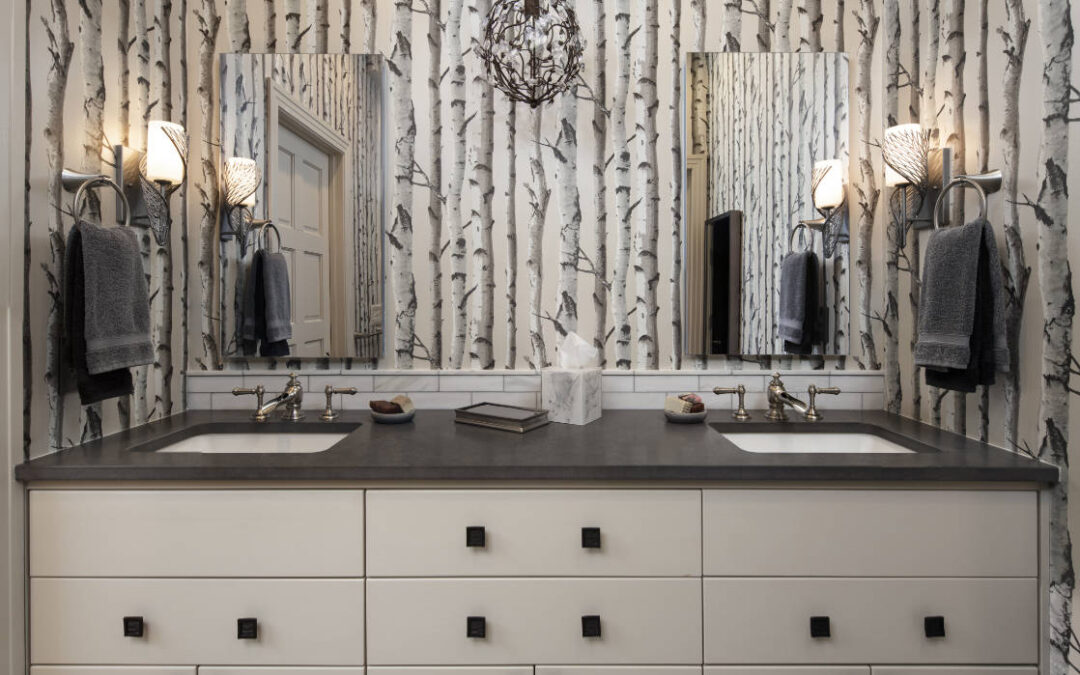
A powder room is my favorite starting point. It’s small, low-risk, and nearly every guest sees it. A bold wallpaper, a patterned runner, and towels pulled from the same palette can turn a forgettable room into the one everyone talks about.
Above all, design for how you live. A Denver family with kids and a dog needs performance fabrics and washable rugs. Fortunately, those now come in rich, saturated prints. Bold interior design and real life can share the same sofa.
Let’s Find Your Version of Bold
Maybe you own a fabric you love and have no idea what goes with it. Or maybe your favorite pieces refuse to get along. Either way, you’re closer than you think.
At à la carte DESIGN, you choose only the help you need. Some clients want a complete room plan. Others just want a color story and a short list of fabrics they can buy with confidence. Bring me the one piece you love most, and I’ll diagnose exactly what your room needs to make maximalist interior design work for your family.
Call 303.885.7706 or request your consultation today. Let’s build a home that feels unmistakably yours.
–
About A La Carte DESIGN: Award-winning interior designer Jeane Dole and her team specialize in creating personalized, sophisticated spaces for Denver-area homeowners. Our à la carte approach means you invest only in services that add value to your specific situation, from trend-focused updates to comprehensive home transformations. Serving the Greater Denver Metro Area including Park Hill, Cherry Creek, LoDo, Stapleton, and Washington Park.
- Award-winning design recognized by Colorado Homes & Lifestyles
- 300+ Denver homes transformed with lasting style
- 4.9 average client satisfaction rating
- Serving Denver metro area for 12+ years
